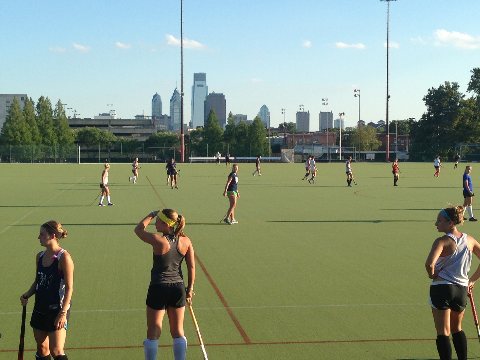
Plenty of room for a 30,000-seat stadium if Geasey Field (here) is used along with the tennis courts, former track stadium and Student Pavilion is knocked down. Click on the largest astroturf field in the world for details.

Plenty of room for a 30,000-seat stadium if Geasey Field (here) is used along with the tennis courts, former track stadium and Student Pavilion is knocked down. Click on the largest astroturf field in the world for details.

“Yeah, but what about the Jet Pack quote?”
Groundhog Day was on Monday, but it has been the last four days for me.
Wednesday wake up, turn on Comcast Sports Net, watch Neil Hartman report live from the Penn State signing day. Thursday, wake up, turn on CSN Philly and watch Neil Hartman report a recap of Penn State signing day. Friday, wake up and watch Neil Hartman interview the Penn State fax guy from Penn State signing day. Saturday, wake up and watch Neil Hartman report about James Franklin recruiting 2016 guys.
Tomorrow, I fully expect another Neil Hartman report on how Penn State fans reacted to the recruiting day. Overkill, thy name is covering Penn State football in a town 250 miles away that already has a FBS college football team. Temple really needs to take them down.
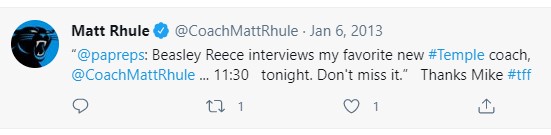
Meanwhile, there is no coverage at all of the burning mystery of the day: What the heck was Matt Rhule referring to in his “jet pack” tweet? If it was about a recruit—as was widely rumored—it could not have been about T.J. Simmons because the time lines do not match up. Here was the original tweet, followed by Adam DiMichele’s “game-changer” tweet:
Just got news so good it makes me want to put a Jet Pack on and take off! #OOU
— Matt Rhule (@CoachMattRhule) January 19, 2015
#🚀 #CTC This could be a GAMECHANGER folks!!!!
— Adam DiMichele (@CoachAD_TU) January 19, 2015
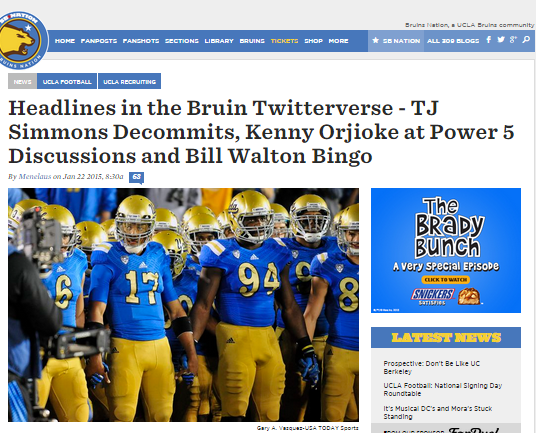
It could not have been about Simmons because three days later he was still committed to UCLA:
You heard it from me first until otherwise …💪🐻#Go bruins #still grinding
— Speedy Simmons #3 (@tjsimmons4) January 22, 2015
Also in the same day:
https://twitter.com/tjsimmons4/status/558095179308351488
Simmons did not change his mind until the NEXT day:
Officially decommited from UCLA today for personal reasons # still in recuirtment #temple #marshall #west Virgina
— Speedy Simmons #3 (@tjsimmons4) January 22, 2015
Unless Speedy told Rhule something on Jan. 18 he didn’t tell UCLA fans until four days later, the Jetpack tweet makes no sense. If it was supposed to be about a recruit, other than Speedy, no jetpack-worthy recruits were signed between Jan. 18 and now.
So, until Neil Hartman has a four-day story on the anatomy of Matt Rhule’s jetpack tweet, we can only assume Rhule knows something about a stadium none of us do.
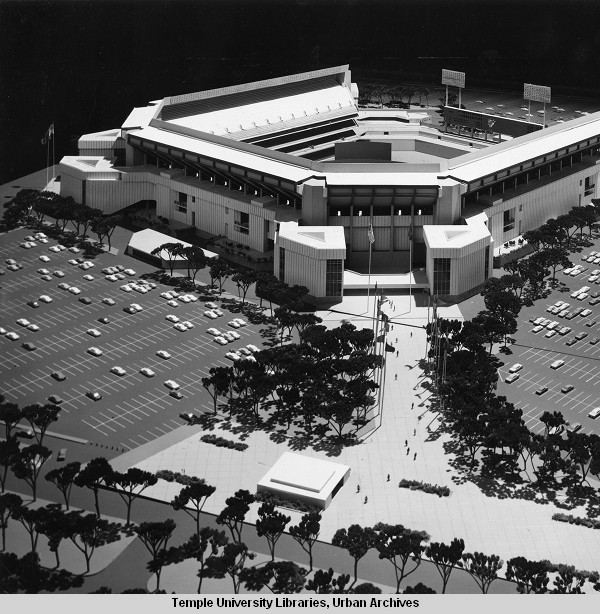
What an on-campus stadium might look like, without the parking lot surrounding it.
Comparatively speaking, there are so few major supporters of athletics at Temple that the word of someone who is should mean a lot. Temple is not like Oregon, where you can see a billionaire like Phil Knight on the sideline of every football game.
The supporter, who makes several billion less than Knight, said he was told at halftime during the Temple vs. North Carolina State March Madness basketball game that a stadium for football was a “done deal.” The Temple vs. North Carolina State game—won by the Owls, 76-72—was March 22, 2013. In a little over three months, that game will be two full years in the rear-view mirror.
No one has seen a shovel yet and that’s why football stadium talk at Temple is just that. Right now, Temple plays its football games in the $521 million Lincoln Financial Field, home to the Philadelphia Eagles. The Eagles want triple the current annual rent Temple pays from $1 million to $3 million.
It’s a steep price, but the Owls should pay it for a number of good reasons. First, it would cost over $300 million to build their own and you to not have to be a bargain-hunter to know that something that costs $3 is a better buy than $300 .
Also, the Owls currently have a beautiful on-campus stadium and it is called The Liacouras Center. After Temple beat No. 10 Kansas and defending national champion Uconn, it was less than half-full yesterday for a conference game against UCF. The LC is a 15-year lab experiment that predicts how life will be in a future on-campus football stadium.
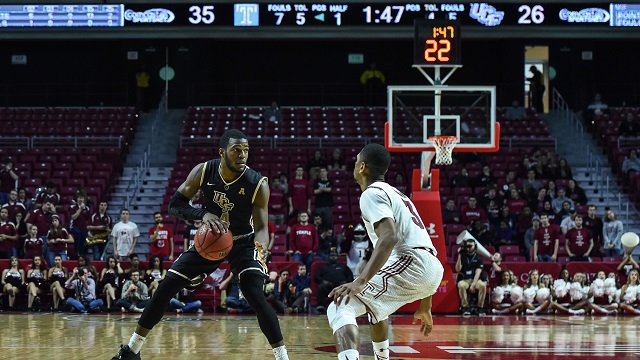
Plenty of seats available at Temple’s beautiful on-campus stadium yesterday.
There is a much more important reason the Owls should continue to play football at the Linc, though, and that’s to make them a much more attractive option for a Power 5 conference somewhere down the road. Although Houston, North Texas, Tulane and Akron have built nice 30,000-type seat stadiums in the last five years, none of them are options for a Power 5 invite any time soon. Very few Power 5 teams not grandfathered in (like Wake Forest) have stadiums with 30,000 seats.
Temple, with the fourth-largest media market and a 70,000-seat stadium and a great basketball program, would be a candidate down the road if it is ever able to figure out a way to just fill more than half of it. Temple has to figure out a way to do that and its money would be better spent supporting football head coach Matt Rhule’s efforts to do that, not chasing some on-campus stadium pipe dream. If Rhule is not able to do the job, Temple would still be better off spending money on a big-time coach who is and not a small-time stadium.
An on-campus stadium jeopardizes any chance Temple has of putting on big-boy pants. A stadium is a nice dream for many Temple fans who want to camouflage a paltry lack of support, but winning and winning big in football is the larger issue that needs to be addressed first.
Spending $300 million on winning is a much more cost-effective option than bricks and mortar.
 Temple Football Forever