Community, Temple Finally Reach Deal On Stadium

underground

The Apollo of Amazon at Temple will be modeled after Dubai’s 35,000 underground indoor soccer stadium here.

On a scale of 1-to-10, the possibility of Temple building a new football stadium reaching fruition looked like a one.

From the university’s perspective, that’s not a good number.

Until Saturday.

It was learned that Amazon.com CEO Jeff Bezos stepped in to mediate a deal between the city, community residents and Temple. If the deal is approved by City Council, Amazon will built its H2Q on the site of the stadium and the proposed outdoor stadium will now become a 35,000-seat Carrier Dome-like indoor stadium below the H2Q.

The working name of the stadium will The Apollo of Amazon at Temple and it will be built entirely underground and completely out of site of the community.

“Hey, we want to build our H2Q in Philadelphia, but we didn’t really like any of the sites,” Bezos said.  “They wanted to put us in University City and the Northeast and we just didn’t like those locations for a number of reasons I won’t get into here. Temple puts us in the middle of a dynamic urban university with a ready-made workforce, near one of the nation’s top business schools and a great public transportation system. We want that site for our headquarters, but we also wanted Temple to achieve its dream of a stadium. I’ve been following the story from the newsroom of The Washington Post (where Bezos is publisher).

msg

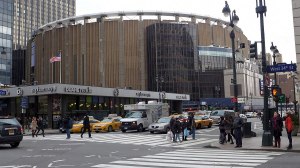
Amazon’s new H2Q facility at 15th and Norris will look something like Madison Square Garden here.

“At Amazon, we’re all about what is inside the box but for this I wanted to think outside the box to please all parties. Being at Madison Square Garden recently, I saw that that the arena was located ABOVE Penn Station and thought that if we could put the stadium BELOW H2Q, we could solve a lot of issues. I want our headquarters to look exactly like Madison Square Garden and become the Mecca for business that MSG is to sports.”

Philadelphia Mayor James Kenney agreed.

“The stadium was always a no-go because of the community but this solves a lot of the community issues and gets us that H2Q we’ve always wanted in Philadelphia,” Kenney said. “The stadium will be below ground out of site of the community and walking to it will be similar to walking down to take the train in NYC now. That  Temple Stadium is out of sight and out of mind of the community and we get our economic driver in Amazon as a beacon to a prosperous future in Philadelphia.”

Bezos said he approached the solution as he would solving a math problem.

“It was always a number’s game,” he said. “One, the city doesn’t want the stadium. Two, the city wanted us more than it was against the stadium. Three, we could get naming rights for the extra $40 million it would take to put the stadium underground. Shuffle all of those numbers together and this was a deal that added up. If Dubai can have a 35,000 football (soccer) stadium, it’s about time the United States has one and we will make it happen.”

Bezos said that at one end of the field there will be a halogram with a “very realistic” view of the Center City skyline, giving the impression that it is a night time outdoor stadium. At the other end, there will be a state-of-the art 3D video board “much nicer than the HDTV one at Lincoln Financial Field.” During timeouts, Amazon Prime commercials will be aired.

“The ceiling of the stadium will be our floor but it will be painted as if it is a clear night with stars,” Bezos said. “There will be no feeling of  claustrophobia inside the stadium.”

Darrell L. Clarke, City Council president, said the community seemed placated by this deal.

“Not everyone, though,” Clarke said. “I would say most of the community was thrilled by the promise of jobs for community members at the H2Q site. They liked that part. The actual coming to work part, well, not so much.  I had a few of the Stadium Stompers say they are changing the name of the group to the Amazon Adversaries. If the Adversaries convince me they don’t want Amazon in the neighborhood, then I will not support it.”

Happy April Fool’s Day Everyone

Related Stories:

The Sky’s The Limit for 6-11 Walk-On

Big 10 Explores Idea of Adding Temple

Addazio’s First Five-Star Recruit

Prodigal Son Returns

Tuesday: The Rest of the Story

The Bullhorn Lady and Rittenhouse Square

square

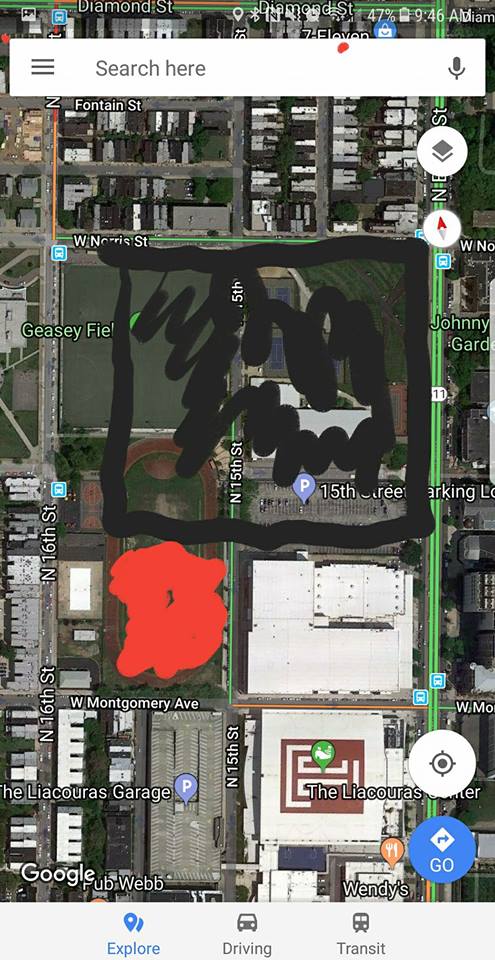
The NAACP wants Temple to put a stadium here, in half the space they already own on campus

Imagine, for instance, if you wanted to build a deck on your property and several of your neighbors came over and said:  “We don’t think that’s a good idea and we’re going to the City Council to fight it.”

The deck is on your property, not theirs, yet they succeed at getting the city to deny you the opportunity to improve your property.

That’s the level of ridiculousness we’ve reached with Temple University attempting to build a stadium on its own property.

bullhorn

“IF TEMPLE UNIVERSITY CAN COME UP WITH THE MONEY TO BUILD A STADIUM, THEY CAN INSTEAD GIVE IT TO THE COMMUNITY OR INVEST IT IN RAISES FOR TEACHERS.”


The sad thing is that the neighbors do not realize how ridiculous they look or sound and probably never will.

I got a taste of this walking into Mitten Hall for the March 6 “community Town Hall” that was drowned out by protesters 13 minutes into the festivities.

On the way in, I was greeted by this sound by a woman with a bullhorn shouting from the seat of a small red car:

“IF TEMPLE UNIVERSITY CAN COME UP WITH THE MONEY TO BUILD A STADIUM, THEY CAN INSTEAD GIVE IT TO THE COMMUNITY OR INVEST IT IN RAISES FOR TEACHERS.”

Huh?

I wanted to saunter over there and disabuse the nice lady of this ill-conceived notion but for my own personal safety let it go. I’ll just explain how “Temple came up with the money”  here.

The stadium will cost at least $130 million and the university is well on its way to reaching its goal of $100 million in private contributions and expects to surpass that by groundbreaking. The rest of the money will be transferring funds already earmarked for Lincoln Financial Field to play in the new stadium.

If the stadium isn’t built, the money goes right back to the donors. It does not go to “the community” nor will it be used for “raising teacher salaries.” The money is for a stadium, or there is no money at all. That’s how that works. Hypothetically, when the university fund-raisers call you on the phone and ask for a stadium donation, they don’t say: “Hey, Sparky, just a heads up. If we run into problems building the stadium, can we get your OK to divert your million bucks to the community or pay raises for teachers?”

Err, no.

Just when you think the level of ridiculousness could not get any more bizarre, the NAACP said Temple University should consider building its stadium in Rittenhouse Square. Three problems with that: One, Temple does not own Rittenhouse Square; two, it’s not a large enough area to build a 35,000-seat stadium on (Geasey Field alone is larger than Rittenhouse Square) and, three, Temple would have to move its campus to Rittenhouse Square for it to be cost effective and Temple simply is not going to do that. Rittenhouse Square is a total of seven acres. Just the “Geasey Field” part of the proposed on-campus stadium site is eight acres, half of what the university has allocated for the entire project.

That would be like your neighbors coming over to you and telling you no deck on your property, but they would support you if you wanted to build your deck five miles down the road in the dog park.

Doesn’t make sense, does it?

Very few things in Provincial “Not In My Backyard” Philadelphia ever do.


Stadium: Rock and Hard Place

abstract

Abstract cell art from our tailgate bud Darin Bartholomew

Depending upon who is consulted, there are two schools of thought regarding this too-long and drawn-out process called building a new football stadium:

  1. Relax. Everything has been taken care of behind the scenes. Everything you see now is for show.
  2. City Council will see a whole lot of protesters in its chambers come crunch time and vote against closing 15th Street, effectively killing the project.

Maybe it’s because I’ve lived inside the city limits all of my life and am all-too-familiar with the way this City Government works, and people in school of thought one live in far-flung places like Long Island and Virginia, but Temple is officially between a rock and a hard place if it does not get permission to close 15th Street.

Guess what?

It’s not coming.

rockhard

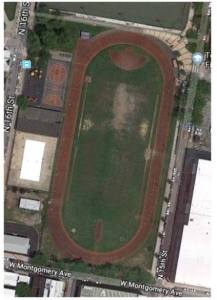
In my mind, just enough space to build if you move the Amos Rec across the street but the Star Complex replaced most of the track and football field here.

Darrell Clarke is dead set against it and the “community” seems dead set against it.

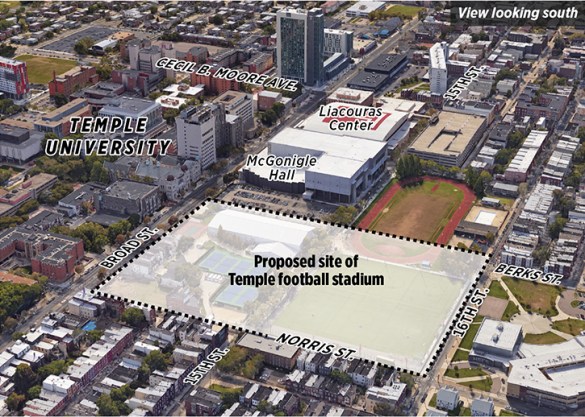
Temple could have built on that site if the Star Complex wasn’t built because it would not require the permanent closing—actually rerouting—of 15th Street. You could probably relocate Amos Recreation Center across 15th to the old student Pavilion and squeeze a 35K stadium into the spot occupied by both Geasey and Star.

Now, with Star built, that limits Temple’s options to this:

Extend the Linc Deal

This will require holding the nose, taking the medicine and swallowing because the “lease” is one of the reasons why the university wanted to build a stadium in the first place.

Go to Franklin Field

Not an option because the AAC requires member schools to have stadium control at least on Saturdays. AAC tolerates the Linc because it gives Temple that control. It will not tolerate Penn having control over AAC TV schedule.

Knock Down The Temple Sports Complex

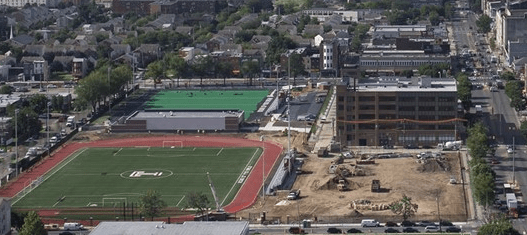
Move the soccer, field hockey and lax teams back to Geasey and knock down a facility Temple just spent $22 million to build and replace it with a football stadium. If you really want to build a stadium on campus, that’s Temple’s only option. It would not require closing any street and because the “community” did not oppose building the stadiums already on that location, they would not have much of an argument against building a football stadium there.

Monday: Our New Scheduling Buddies

Best Cherry and White Day Ever?

proof

Proof that a stadium or two can be built at TU without community opposition

Back in the day, they built a $22 million on-campus stadium right in the heart of Temple University’s footprint with nary a peep of protest from the surrounding community or student “Stadium Stompers.”

That day was two years ago and it is now the permanent home of Temple soccer, field hockey and lacrosse.

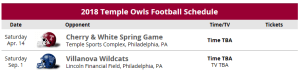
It will also be the temporary home of the Temple football Owls for what could be the best Cherry and White Day ever. The game will be moved to the soccer home of the Owls a few blocks south of 10th and Diamond this year, better know as the “Temple Sports Complex” or, more specifically, Howarth Field.

logical

We called for this a year ago and the university listened

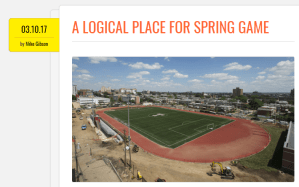
We’ve called for the Temple spring football game to be moved here last year (see inset to the right) and finally the university listened. Meanwhile, we had a lot of the status quo apologists on social media pooh-pooh the idea saying “you can’t do it because of recruits” and “you can’t do it because of logistics.”

Well, Temple is doing what the naysayers said cannot be done and the powers-that-be (Pat Kraft and company) need to be applauded for that, moving the football game from an overly cramped facility to a more roomy location with plenty of seating.

nexttwo

The discussion last year centered on just why the university was intent on squeezing 5,000 pounds of fans into a 100-pound bag when a 2,000-pound bag became available.  Bringing portable seats for 500 people when, on a nice day, you can get 5,000 people into a little over 100-yard square area made sense when you had no place else to go.

Now they do and I hope this is the temporary spot for the game going forward, at least until a larger stadium can be built. The soccer facility opened in the fall of 2016 and the place has 2,000 permanent seats and they can still move those portable E-O seats to that location.

South Florida, which also plays in a NFL stadium, moved its spring game from its football complex to its soccer complex in 2016 and it was an unqualified success. All the Bulls had to do was line the soccer field with football yard lines, put a couple of goal posts in and away then went.

April 14th’s Cherry and White game figures to be the best ever for a couple of reasons, a celebration of the school’s third bowl win and Paul Palmer being inducted into the College Football Hall of Fame. Bruce Arians can’t come this year due to a prior commitment, but has promised to catch a Cherry and White game in the future.

The people have been the ones who have made Cherry and White great in the past. Now that they get to enjoy it in a place slightly larger than a phone booth, the location just adds to the usual great time.

Friday: Rock and Hard Place

Monday: Scheduling Buddies

Wednesday: The Bullhorn Lady

Fiasco at Mitten Hall

hearyou

The community asked for answers and responded this way

For today’s social experiment, we ask you to depart the Temple campus–on foot, not vehicle–and proceed to walk East of, say, 9th and Berks for five blocks.

Now walk West of 17th Street on Norris and complete a similar five-block trip to 22d and Norris.

youngchaney

“Temple should pack it up, move to the suburbs, and leave a hole in the ground and a statue of the Mayor and the Council president holding hands.” _ John Chaney, on the opposition to building what is now the LC


That is what the heart of North Philadelphia would look like without Temple University. That’s pretty much life in a lot of inner cities in America. It’s not the fault of the people who live in them, certainly. In Philadelphia, what the neighborhood looks like surrounding Temple is certainly not Temple’s fault.

The community has legitimate concerns about the new stadium Temple wants to build entirely on Temple property and ask the questions they need to and get their answers. In fact, Temple has pretty much hit on all of the key bullet points–no one will be displaced, the Amos Recreation Center will stay right where it is and the stadium would be available for community events.

Yet the session they asked for turned out to be a Mitten Hall Fiasco. I left work and made it in time to see a group of clergy urging their congregation to listen and the congregation having none of it.

The “stadium stompers” asked for the town hall in the guise of a question and answer session. They never allowed it to get to a Q and A, with loud shouts of “YOU LIE!!” that would not allow the event to continue. It was all a ruse. I would say there were more pro-stadium people in the house than anti-stadium but the pro-stadium people sat in what only could be described as polite silence mixed with nauseating disgust.


Why should other urban
universities located
in densely populated
residential neighborhoods,
like Georgia Tech in Atlanta
and Boston College
in Chestnut Hill, Mass.,
have stadiums on property
owned by them and Temple
not be allowed the same right?

Temple set only two ground rules for the meeting and it was no signs were allowed and that civility was expected.

One side broke both rules and ruined it for all sides.

Asking for a Q and A and not allowing questions or answers is the very definition of a ruse. This is pretty much the level of discourse in the U.S. today.

Why should other urban universities located in densely populated residential neighborhoods, like Georgia Tech in Atlanta and Boston College in Chestnut Hill, Mass., have stadiums on property owned by them and Temple not be allowed the same right? The community did not protest when Temple built a library, a dorm, $30 million of new classrooms and even a $17 million football practice facility but basketball and football arenas somehow cross an imaginary line because they are hot-button issues. The irony of this is that libraries, dorms and classrooms have an impact on the community 350 or so days a year, while a football stadium impacts it only a maximum seven of the 365 days.

diamond

5th and Diamond

When the great John Chaney was asked what Temple should do in the face of similar opposition to the building of The Apollo (now the LC), he said, simply this: “Temple should pack it up, move to the suburbs, and leave a hole in the ground and a statue of the Mayor and the Council president holding hands.”

The administration should have followed his advice then. On Tuesday,  it tried to be a good neighbor, but neighborliness is a two-way street. Nobody can say Temple did not hold up its end of the bargain.

Monday: Spring (Practice) is in the Air

Wednesday: Our New Scheduling Buddies

Friday: The Greatest Cherry and White Ever

Monday 3/19: A Rock and A Hard Place

Wednesday (3/21): The Bullhorn Lady

Three Facts and Five Questions

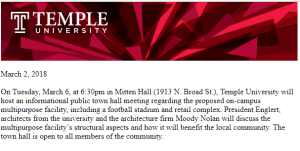
No matter what you call it, the “Town Hall” being held tomorrow night (6:30) at Mitten Hall has all the potential to be either a public relations disaster or a bonanza  for Temple University.

I’m not betting on Hos Cartwright here, though.

Television cameras from all four local stations will be there with the express purpose of finding some sound and fury that would make for good fodder for the 11 p.m. newscast.

If Temple fans who want the stadium show up and dominate the session with applause and support for the ideas presented, that segment would probably find a way to the cutting room floor. If, say, for every 10 people who attend, one voice is against it and nine are for it, the narrative will be “there were some opposed and some in favor” and they will find one voice in favor and one opposed, even if there are more fans for it than against. That’s the way the drive-by media works these days. If no fans show up and only “community” members expressing opposition are there, it will be the top news story of the night.

I think we are going to be somewhere in between those two extremes, though.

mitten

It was pretty ingenious for the university to set this town hall up at a time when the students are gone. Most of the “Stadium Stompers” among the students are from relatively far-flung places like Allentown, Lancaster and Scranton and their activism on the topic probably only extends to the time they have to be in North Philly. It’s hard to imagine them giving up a spring break visit to Florida or time home with their Penn State friends for idealism. At least when idealism is not convenient.

President Dick Englert did not even address the stadium when he talked at the recruiting “celebration” on Feb. 7 so to me, the forum presents an opportunity to answer some hard questions that were not even broached then. Here are five of them:

yulman

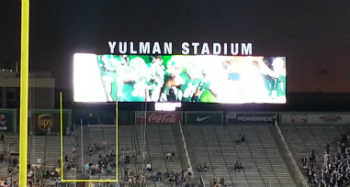
Yulman: Rejected by ESPN

How did the stadium shrink?

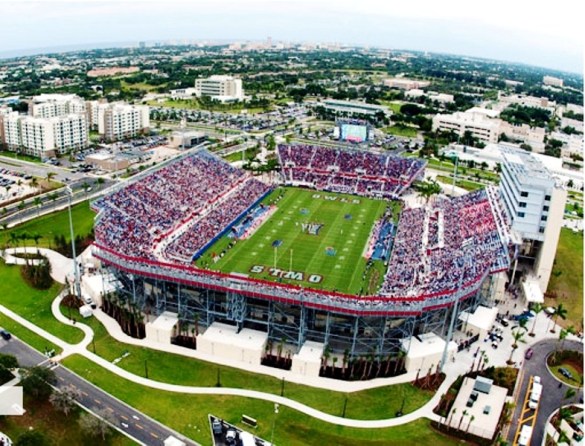
Two months ago, when the plans were officially released, the minimum seating was going to be 35,000. Now, we’re hearing “between 30-35 thousand (see above video).” Not good. Why is this important? Because 30,000 will make the stadium look like Tulane’s Yulman Stadium and, by most accounts, that stadium was obsolete the day it opened. All of the Temple fans who I talked to and have been there hated it.  It’s nothing more than a glorified high school stadium and the league told Tulane the TV sightlines and lighting almost made it impossible for ESPN to schedule a night game there. Temple should go bigger (at least 35K) or go home, making the stadium look more like successful ventures like Houston, Cincinnati and Florida Atlantic. Moody Nolan needs to come clean. Will this look more like Tulane or more like FAU?

What, exactly, will go into the retail outlet?

What kind of retail will be considered or will the university build five empty franchises and hope that the market dictates the tenant? Some kind of smaller version of Xfinity Live would work, maybe a WAWA. I wouldn’t put another student bookstore or pizza shop in there, though. When I lived in Doylestown, we desperately needed a grocery store in the center of town. Instead, we got five coffee shops that mostly went out of business because wives of the rich guys who lived there always had the fantasy of opening coffee shops. Build what the students and community will need and support.

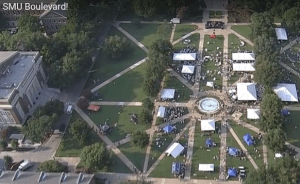
smuboulevard

Where will the traditional tailgating be held?

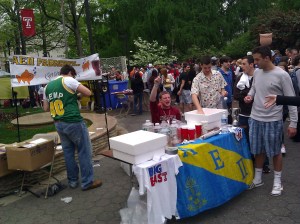
We all know that the university is planning to put the thousands of students who now take up a large portion of Lot K into Polett and Liacouras Walks and that’s a terrific idea. SMU has shown how successful that concept can be. Still, how many of the university’s 11 outside parking lots be set aside for more traditional tailgating on Saturdays or are the days of the traditional smaller tailgates over?

What is the timeline?

The university should set a timeline that it expects to meet. City Council approvals by this summer, next summer or the summer after or somewhere in between? At what point does this project cross the Rubicon of no return and what are the options other than Franklin Field if it is abandoned? Temple cannot allow the endless speculation on this to continue and must set some realistic parameters for getting this done.

success

Does the University Have the Stomach to Play Hardball?

We’re not talking about restoring the baseball program here, although you could probably configure the stadium for those purposes if needed. If the City of Philadelphia does not give the necessary permissions, can the architects reconfigure a stadium that would not require 15th Street to be shut down? That’s what is going to have to happen for the uni to pursue legal action to get this done. An argument can be made that if places like Maryland, Rutgers and Georgia Tech have the legal right to build whatever it wants on property owned by them so, too, should Temple.  Hardball–threatening to move the uni out of Philadelphia–is what ultimately got the LC built and the uni might have to play some sort of hardball to get this done as well. Pete Liacouras had that stomach. Does the current BOT?

Wednesday: Eye on Atlanta

Friday: Reflections From Mitten Hall

Ten Reasons To Build The Stadium

proposed

Snails have crossed the continental United States faster than Temple University has moved to build a football stadium since the first “done deal” was uttered by a member of the Board of Trustees to a follower in March of 2012.

That was the day that Temple beat North Carolina State in the NCAA basketball tournament. The listener was a long-time fan who made numerous road trips to support his alma mater in both basketball and football. The speaker was presumably well-connected with the powers-that-be at Temple.

Five months of March have come and gone and there has been no public announcement of the “done deals” so many of us have heard for five years. So call me skeptical that this thing will ever get built.

BOT meetings have come and gone and several of the last few have had “rumors” that the stadium would be discussed. Meeting agendas were released and no first “shovel in the ground date” could be found even in the fine print.

parking lots

There are 10 lots that will be mostly empty for tailgating on Saturday, plus a couple of garages for those who do not plan to tailgate.

An argument could be made both for and against a stadium and former Temple player Dave “Fizzy” Weinraub made such an argument against in this space a couple of weeks ago. My feelings have simply been this: If the university has reached the point where it feels it can no longer deal in good faith with the Philadelphia Eagles, then build the stadium. If it has created the conflict with the intent of going ahead and doing what it wanted to do in the first place, that would be a sad pretense on which to build.

It may have already reached one of those two crossroads. Five years of due diligence could be coming to an end and, hopefully, the university is doing what it has to do and not building it because it just wants to do it.

owlstudents

If it can cut a deal with the Eagles similar to what the Pittsburgh Steelers have with Pitt, then there is no reason to build. The alternative–Franklin Field–is not acceptable. Temple would have to have stadium control on Saturdays for television purposes and Penn, with its $6.9 billion endowment, could not be enticed to give that up to a school with a $579 million endowment.

Fizzy says the “neighborhood does not want it” but maybe if the neighborhood could get assurances that none of their houses would be torn down–and they won’t–and that local high schools like Engineering and Science can play their football games there and that stadium jobs would be available to immediate residents first, then something could be worked out.

Fizzy’s second point was that “Temple doesn’t need it.” If it wants to be a program that gets on television, and LFF’s rent is too high, that point could be disabused.

Fizzy’s third point was that “it closes off 15th Street” but 13th Street was closed for most of my four years at Temple due to various building projects between then Columbia Avenue and Norris and nobody died because they had to use Broad Street to travel Northbound.

studenttailgate

Student tailgate central

No. 4: “Parking Will Be Scattered Around Campus making it very difficult for older fans to walk to the stadium.” It’s not asking much to walk from, say, the No. 10 Lot at 11th and Norris to 15th and Norris but, I’m sure the university could provide a mode of transportation, maybe golf carts, for those who don’t feel they can make it. Owlclub members will probably get preferential parking in the McGonigle Hall outside lot, so that’s an option.

No. 5 is “there will be no common tailgating area” but that’s really not needed. Really, is the tailgating “one common experience” or is it smaller groups scattered throughout Lot K now? To me, it’s smaller groups who tailgate together and go in separately. Plus, students who take up a large part of Lot K now will be funneled to Liacouras Walk for their own tailgates. The official alumni tailgates now conducted under a large tent closer to the Linc entrance can be moved to the Bell Tower.

No. 6 “traffic will be horrendous” doesn’t really apply to football because fans usually don’t get there five minutes before a game. Their arrival is scattered starting with the opening of the lots five hours before the game, not five minutes, with groups filtering in four, three and two hours before the game. Traffic won’t be great, but it won’t be horrendous, either.

No. 7 “don’t take the subway” doesn’t really come into play, either because there is a perfectly good regional rail station located right on Temple’s campus that provides the kind of transportation option fans do not have going to LFF now. In fact, if the new stadium is built, my days of taking the subway to the Temple games–which I have done for 15 years–are over. I will hop on the Regional Rail and be at Temple in 20 minutes.

No. 8 “the Linc has easy accessibility” is true, but a football game is an event lasting from the start of tailgates to the end of the game and that’s an all-day deal.  Again, I don’t see all the traffic arriving at the same time. If you want to drive, get off the Roosevelt Boulevard extension and make your way down Broad Street.

No. 9 “Temple will lose a large percentage of its older fans” and some of their contributions. I’m an older fan. They won’t lose me but the point is that the university has 40,000 students now and must cultivate that fan base which really has not been tapped into seriously. This stadium could create the kind of experience for them that binds them to the university for decades to come.

No. 10 “Temple will incur a large unnecessary debt” could be true, but the bean counters running the university say it will be more than offset by combining the money they pay for rent now with revenue gained from parking and concessions and the retail element of the stadium.

To me, there is a larger issue involved that goes beyond signage on the field or comfort in the stands. In my lifetime, I have never experienced a real home-field advantage following the Owls except for maybe the Tulane game in 2015 when all 35,000 fans were screaming their heads off for Temple. Getting 35,000 fans in a defined space on top of the field and making so much noise that the bad guys’ quarterback has to use hand signals to snap the ball is something I’d like to see before I leave this earth. It hasn’t worked for the beautiful new on-campus basketball facility, but maybe football is another animal.

The university needs to end five years of constipation on this issue and bleep or get off the pot.

Friday: The G5-P5 Conundrum

Monday: A Book That Needs To Be Written 

TEN REASONS NOT TO BUILD TEMPLE STADIUM

faustadiumday

AECOM built the FAU stadium and will be one of the two architects for this one.

 Editor’s Note: Dave “Fizzy” Weinraub checks in with his thoughts on the stadium. He’s against it. I’m ambivalent. If no stadium means a permanent move to Franklin Field, I’m for the stadium. If we can extend the lease at the Linc, that’s the preferable option. Ironically, Fizzy played all of his home games in  a place called Temple Stadium.

By: Dave (Fizzy) Weinraub

  1. NEIGHBORHOOD DOESN’T WANT IT
  1. TEMPLE DOESN’T NEED IT – It needs the Eagles to give Temple the same deal the Rooneys give the University of Pittsburgh – Pitt just pays expenses and gets half the net from the concessions. A blue ribbon committee should meet personally with Jeffrey Lurie.
  1. IT CLOSES OFF 15TH STREET – Disrupting southbound traffic
  1. PARKING WILL BE SCATTERED AROUND CAMPUS – Making it very difficult for older fans to walk to the stadium.
  1. THERE WILL BE NO COMMON TAILGATE AREA WITH ACCESSIBILITY TO

FAN’S CARS FOR FOOD AND BEVERAGES – Temple says the open space for tailgating is the quad, but you can’t drive your car there.

  1. TRAFFIC WILL BE HORRENDOUS – Broad Street has lights at almost every corner.  The number streets have either lights or stop signs at every corner.
  1. DON’T SAY TAKE THE SUBWAY  – Most older fans are not going to take the subway. Drive or take the subway to a night game; HA! HA!
  1. THE LINC HAS EASY ACCESSIBILITY FROM SOUTH JERSEY, ROUTE 95, THE AIRPORT AND DELAWARE, AND THE SCHUYLKILL EXPRESSWAY.  That’s why it was built there.  How will fans from all those suburbs possibly drive to campus?  There will be gigantic traffic jams at Broad & Vine.
  1. TEMPLE WILL LOSE A LARGE PERCENTAGE OF THEIR OLDER FANS AND SOME OF THEIR CONTRIBUTIONS – Most of the season ticket holders are older folks, forty to eighty tears old.  Most of the big givers to the university are from this age bracket. Given the problems listed above, many will not purchase season tickets and lose allegiance to Temple.
  1. AS PREVIOUSLY PUBLISHED IN THE INQUIRER, A FINANCIAL ANALYSIS OF SCHOOLS NOT IN THE POWER FIVE FOOTBALL CONFERENCES WHO BUILT NEW STADIUMS, ARE CARRYING LARGE, UNNECESSARY DEBT.

Even the Egyptians have stopped building pyramids.

Tomorrow: Merry Christmas!!!

Wednesday: Season Analysis

Friday: Recruiting


Phillies, Temple, Get Stadium Deal Done

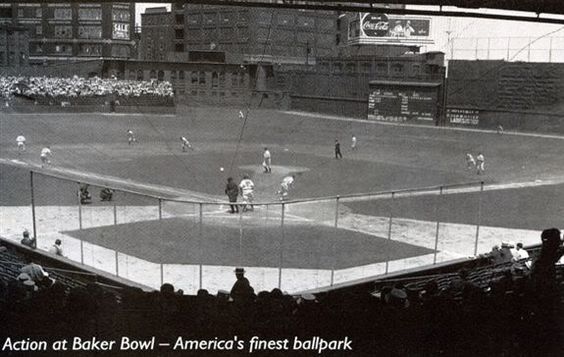
bakerbowl

With latest agreement, Phils will return to North Philly roots.

It started the way all good deals start, with one guy having something the other guy wants.

In the case of Temple University and the Philadelphia Phillies, though, today’s announcement had the added caveat of two guys wanting something the other guy has and that’s what has led to a “memorandum of understanding” between the two organizations on a stadium deal.

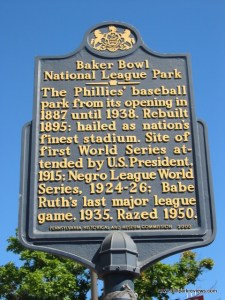
bakersign

Two blocks North of Main campus is this sign.

The outline agreed to is simply this: When the Phillies are ready to leave Citizens Bank Park, it will be sold to Temple for the princely sum of $1. In return, Temple will give the Phillies what it has long sought—a  plot of land to build a nearer midtown baseball stadium with a spectacular view of the Center City Skyline.  Not having that view while Pittsburgh has had it all along has been a major bone of contention with the Phillies ownership.  That plot of land is the former Geasey Field, which is now bounded on the North by Norris Street and on the South by Montgomery Avenue.

The time frame is open-ended, according to Phillies General Managing Partner Dave Montgomery. Temple will start to phase into CBP when the team offers open weekend dates to the football Owls in 2021. Only if there is a conflict will the Owls are moved to Franklin Field. Once the North Philly Baseball Stadium is built, the Owls will become sole operators of Citizens Bank Park.

“The discussions began when (Temple president)  Dick (Englert) and I were at a function,” Montgomery said. “I said, ‘Dick, this thing with the community could go on for a hundred years. Why don’t we agree to do something now?’  Dick said he would talk to the Board of Trustees and here we are today.

“Look, we know that there are still hurdles. The community might not want a baseball stadium there, either. But it is our view that we are returning to our North Philly roots—we had stadiums at Broad and Lehigh and 22d and Lehigh—and maybe the community will welcome us home with open arms.

“The key thing here is that even if we don’t get our North Philly Stadium built—the working name is the Philadium—Citizens Bank Park becomes Temple’s at the point in time that we do build a new stadium, wherever in the city that may be. I know Temple fans don’t want to hear the word, but patience is the key word. If Citizens Bank Park becomes obsolete for baseball in, say, 2069, it becomes perfect for Temple football at that time. What this agreement gives Temple now is a sense of certainty. In their quest for a stadium over the last 20 or so years, certainty or done deal has never been part of the lexicon there. Now it is and it gives us some comfort to give them that.”

Happy April Fool’s Day everyone.

Related:

Devonte Watson

Urban Meyer

Big 10


Monday: The Last of the Two-Way Players

Be All, Or End All?

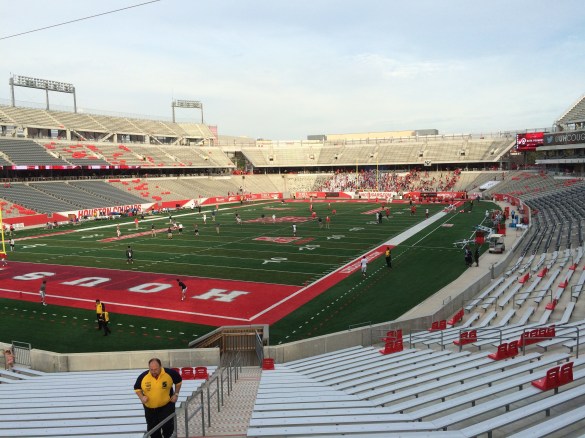
houston

Houston is more like Temple than any other AAC school.

This will be the last post, at least on this site, on a stadium until Temple University officially makes some sort of pronouncement about a timetable for construction.  The prediction here is that will not come for another year or two, so any further speculation on the topic is really silly.

All that has happened so far is that Temple has announced it wants to build a stadium and the city has announced it is against Temple building that stadium. We have reached, with apologies to Donald J. Trump, a Mexican Standoff.

This is going to be a long, drawn-out, process. First, the uni is going to have to get past the minefield that is City Council and, once past that, artillery of the “community” and, after that hurdle, the tanks and suicide bombers of possible law suits holding up the project. People who are talking like there could be a game in the new stadium in two years are really kidding themselves. More like two years until there is the first shovel on the ground.

If that.

This post, though, is largely to tell the tale about Houston’s beautiful new facility and the similarities that Houston has with Temple, which are many. When I first heard that Temple was considering a football stadium,  oh, about 50 or so years ago, I found the idea more than intriguing but necessary.

The Owls were nomads at the time, playing at a sub-standard stadium, the Vet, or at the tail end of their long-term relationship in Mount Airy. Then, the Owls talked about building a 35,000-seat indoor football/basketball complex on the site of Wilkie-Buick, and that’s probably what should have happened. The Owls would have solved two problems, football and basketball, and dealt with the community and the city once, not twice.


“There’s the games-are-at-the-(pro stadium)
excuse, so there’s no college environment,
and if UH just moves games to campus,
things will be fine. … then there’s
the neighborhood-isn’t-safe excuse.
And the traffic-sucks excuse.
Don’t forget the problems-with-parking,
or there’s-not-enough-good-spaces
-for-tailgating excuses.”
Sound familiar?
It’s Houston, not TU

Now, the Owls are in a half-billion dollar palace just seven miles south of the campus with a dedicated subway stop at each end taking as many students who want to attend games door-to-door.

There are a lot of things to consider about a new stadium, and chief among them, is the question about it solving all or most of the program’s current ills. There are a couple of working studies to consider and one is the 15-year Liacouras Center history. In the years since the LC was built, Fran Dunphy had the team winning three-straight A10 titles and there were plenty of seats to be had in those years. You can complain all you want about Dunphy, but when he gives you three-straight league titles and that arena comes nowhere close to selling out  on a regular basis, you’ve got a fan problem that is deeper than an on-campus facility. Another is Houston’s beautiful stadium, where the Cougars have completed their second season.

In this story, head coach Tom Herman complains about attendance, and the writer cites many of the concerns some Temple fans have about an on-campus stadium. There are a lot of sides to this stadium story, and it’s not all crystal clear.

While l would love to be able to walk from one end of the campus to a football game on the other end of the campus, it’s worth five minutes of your time to read that what happened in Houston wasn’t the be-all or end all it was cracked up to be.

Monday: Anthony Russo’s 2016 Role

Wednesday: The Second Easiest Schedule In College Football