5 CFB Pet Peeves


revolting

Anyone who has ever played the sport at some level will tell you about the butterflies.

To me, the excitement never was so bad I had to throw up before the game, but a surprising number of my teammates did.

As a high school linebacker, though, I knew all about the butterflies. You feel that queasy feeling in your stomach until the first hit and then you are fine.

It’s the way football works.

When I got to Temple, I was too short and too slow to play, but experienced the same kind of butterflies as a fan before the first game of the season.

Lately, though, the anticipation has waned because the game has changed a lot for my favorite college football team. Hell, it’s still my favorite sports team but I am more than a little annoyed at the changes in the game since I received my Temple sheepskin. In no particular order, they are these:

templehelmet

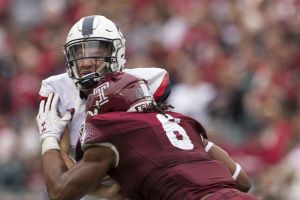
Helmet Targeting

I know this is a necessary rule but a nice clean hit is a football play. Lately, though, the line between clean and dirty has been blurred due to the targeting rule. I completely understand it with the CTE and all but it’s not the football I grew up with and too many players are thrown out of the game when the worst thing that should happen is a 15-yard penalty.

The Schism Between The Haves and Have Nots

There are 127 teams in the FBS and 64 of those teams—the ones in the so-called Power 5—are treated fairly the others are not. If one of the “others” (UCF) can win all of its games—including wins over the two teams eventual champion Alabama lost to—and not be given an opportunity to compete in the Final Four, college football has lost all sense of fairness.

The Bowl Situation

With 80 and soon-to-be 84 bowls, college football has turned into a reflection of sports in society as a whole where a lot of “participation trophies” are handed out. Back in the day, it was so hard to get into a bowl that the 1984 Temple team beat a 9-2 Toledo team, 35-6, and Toledo got to play in the California Bowl while Temple stayed home. In 1986, Temple beat another 9-2 team, Virginia Tech, 29-13, but stayed home while Virginia Tech played in the Peach Bowl. Now, 40 teams get a participation trophy.

Pilfering of Players

Back in the day, when a player made a commitment to Temple, the commitment lasted through signing day. Over the last decade, up to five players a  year have decommitted from the school and signed elsewhere. The most high-profile of those was Arkum  Wadley, who ended up at Iowa. What happened to “your word is your bond?”

pitt

Regional Rivalries

A short trip to Rutgers or Syracuse or Pitt used to be on the agenda for every other season. Now those teams are in far-flung leagues playing against schools they have very little in common with. On the other hand, Temple has to travel to places like Memphis and Tulsa. It’s just not the same anymore. Pitt suffers from losing its rivalries with Penn State and West Virginia more than Temple does with Rutgers and Syracuse, but college football is better off with those regional rivalries and it does not look like they are coming back.

Sadly, that’s the state of college football in 2018. While kickoff against Villanova will be exciting, the way the game has evolved is in the other direction.

Still, no better sport but the fact it was better in the good old days than it is now is something that can be viewed as objective, not subjective.

Wednesday: The Ideal Temple Uniform

Recruiting: Fireworks or Dud?

hardwork

It’s quite possible this recruiting haul on the beach last  year was better than this year.

For nearly two weeks now, the Temple football twitter site promoted July 4th fireworks with at least a hint or two that a big-time recruit will be committing on that day.

That’s the deal with fireworks. The more promises you make, the greater the expectations. Sometimes they go off in multi-colored extravaganzas and sometimes they blow up in your face. This latest rollout qualified more in the latter category than the former from what I can see.

Our thoughts on Temple football recruiting, particularly since Al Golden brought his binder to town, have simply been this:

TRUST BUT VERIFY.

The Philly.com article did not mention where the six July 4 commits received offers from in addition to Temple, but Shawn Pastor’s excellent site, OwlsDaily.com, did.  One of them was Kennique Bonner-Steward, a 6-4, 215-pound, dual-threat quarterback from William Amos High in Cornelius, N.C. Bonner-Steward had 17 offers, most from FCS schools and his top “other” FBS offers were from Tulane, Old Dominion and Georgia State (err, not Tech).

This is the spin Pravda–otherwise known as Owlscoop.com–put on the day:

pravda

A little misleading as an astute guy named Steve correctly pointed out:

stevebest

You will never, ever, ever, find Pravda criticize a Temple football recruiting class perhaps because the editor of that site is a paid Temple employee. Everything ranks from honky-dory to downright spectacular over there. Just a theory based on years of observation.

Speaking of which, that elicited a very defensive response from Gauss’ boss (John DiCarlo, above). What the hell does Tyler, Tavon, Dion, Matt and Nate have to do with Collins under-performing against P5 competition this year? And what, exactly, did Collins have to do with developing any of those above players?

The answer would be zero.

Just because Matt Rhule got the job done doesn’t mean Collins will do the same.

The other commitments were  running back Jamal Speaks (Upper Marlboro, Md), Tampa (Fla.) wide receiver Josh Youngblood and two defensive linemen from Georgia, Zaylin Wood and Jacoby Sharpe. Speaks had an offer from Maryland and Youngblood had an offer from Minnesota so, on the day, those are the two most-high profile Temple recruits.

Not the kind of fireworks we were looking for considering that the Owls were able to land much-higher profile guys under both Golden and Rhule.

Here’s another take calling out Pravda:

another


Temple football has a highly paid staff of professionals in charge of these things but the thought out there is that other schools have more highly paid professionals in charge of the same things and that if the two ever agreed on a player that would be a good thing, not a bad one.

Temple is never going to win all the battles with the so-called Power 5 schools for players, but our formula for long-term success is that Temple should win at least a few of them—anything from a quarter to a half—and then trust its instincts on other type players.

Those instincts have served other staffs well with guys like Muhammad Wilkerson (a two-star who turned into a first-round NFL draft choice) and Haason Reddick, a walk-on who was a higher first-round choice. Then there is Tyler Matakevich, who turned his only offer (Temple) into a national consensus defensive player of the year (Bednarik, Nagurski Awards).

Those are the exceptions, though, to the general college football rule. The really successful programs develop players in addition to be able to win a majority of recruiting battles.

Ideally, that’s the kind of recruiting balance you are looking for in a good class. This one has leaned in the developmental direction and, while that might turn out to be a good thing, it leans more toward risk than reward.

No matter how Pravda spins it.


Stadium: The Alternatives

cbpfootball

TU fans would be right on top of the action at CBP.

For the next year, maybe five, the powers-that-be at Temple University who comprise the Board of Trustees can bang their collective heads against a wall or get to work.

Banging their heads would constitute essentially what they are doing now: Trying to make peace with people who want no peace.

Neville Chamberlain tried to do that with the Nazis in the late 1930s. When the British finally figured out the Nazis did not want peace, it was almost too late. Winston Churchill finally unraveled that mess.

Temple wants peace with its neighbors and a stadium entirely within property it owns. Because a part of that property is a public street, the neighbors can block it so Temple must abandon this folly and figure out a place and a way to build its stadium or look for the alternatives.

Here are the acceptable ones:

skyview

Plenty of room (counting space on right) for a 35K stadium at Broad and Master.

Move the stadium to Broad and Master. This would require knocking down a brand new $22 million Olympic sports facility and moving it back to Broad and Norris. That probably means spending another $22 million on the Olympic facility but it would be worth it. Critics of this plan say “it won’t fit” but that’s only if  the fields are North-South. Anyone who attended the spring game saw plenty of room for an double-decker East-West stadium from Broad Street to 13th Street that would require no closure of a city street.

homes

A simple purchase of either “North Broad Getty” or “Auto Zone” or “Wheel thing” gives Temple plenty of room to connect the hospital with the main campus via a stadium


Connect the main campus with Temple Hospital. Put the stadium halfway up Broad Street. There is plenty of open land that Temple can acquire near the  North Broad SEPTA train stop that would allow for more parking. Just take a ride North of main campus (lock the doors) and you will see boarded-up property, not actual homes, along the old route that included the Phillies first home (Baker Bowl, Broad and Lehigh). Can’t imagine the neighbors would object to Temple purchasing homes that currently are unoccupied and boarded up. It would be within walking distance of both the main campus and the health sciences center and just as accessible to rail and subway transportation as the current plan. Again, no public streets would have to be closed.

Swallow hard and accept Jeffrey Lurie’s demands. Any way you look at it, Temple is going to spend a lot of money parking its football program. Either it’s the laughably low figure of $130 million for a stadium or increase its rent five-fold to the Philadelphia Eagles for the right to play in one of the nicest stadiums in major college football.

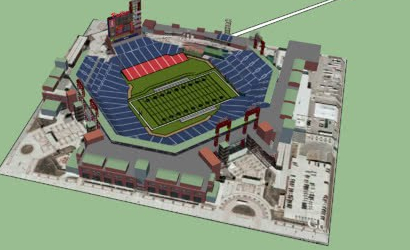
Wait The Phillies Out. This is not as crazy as it seems. Extend the lease and work with the city and the Phillies to get their long-sought-after Center City stadium. Then slide into Citizens Bank Park. Play at the Linc until then. A 45K Temple football stadium in South Philly makes more sense than a 70K Temple stadium in South Philly or even a 35K Temple stadium in Templetown.

Unacceptable would be a move to Ambler  or an upgrade of the Chester stadium (farther away than the Linc and less accessible to public transportation) or any deal with Franklin Field, which would be seen as a return to the bad old days.

Either way, if this last-ditch “community engagement” does not work, the BOT needs to roll up its sleeves and come up with a new plan.

Banging heads against a wall for the next five years serves no purpose to anyone.

Good News for Owls: More Bowls

sundevil

If the AAC can get a tie-in to the new bowl in Arizona, Temple could be playing in Tempe.

Anytime someone moans and groans about there being “too many bowls” I say there are too few.

After being hit with a “are you crazy?” stare, I mention two things:

  • Temple’s 2010 team
  • Cornhole Championships

By now, the story of the Temple 2010 team is well-known, but it’s certainly worth repeating.

Those Owls finished 8-4 and pummeled a team, UConn, 30-16, that made the Fiesta Bowl. The Owls being denied when the Huskies, also 8-4, were accepted (via being in a BCS league, the Big East) was widely regarded as one of the biggest miscarriages of justice in recent sports history.

Besides some mentions on the afternoon ESPN talk shows, Temple got nothing out of that bowl season and, the day after head coach Al Golden held a meeting to say: “Guys, we’re not going anywhere” he announced he was taking the head coaching job at Miami.

Talk about a punch in the gut one day followed by a kick in the nuts the next, that was it for Temple football.

Cornhole championships come into play simply because that—and poker and bowling—are staples of the ESPN programming after the bowl games are completed in January. If two or three extra bowl games take cornhole, bowling and poker off television that’s not only more palatable to me but for ratings in general.

Anything that gives an 8-4 or a 6-6 Temple team a greater chance at bowl exposure is good news, not bad so that’s why Brett McMurphy breaking the story of more bowls starting with the 2020 season is encouraging.

Chicago and Myrtle Beach, S.C., are locks to host two of the three new bowls. Phoenix, another attractive site, is rumored to be leading for a third bowl.

Meanwhile, from an American Conference perspective, the league is musing a permanent invitation for its champion to play in the Liberty Bowl, if the champion doesn’t make the NY6 game. That’s a good idea because the Liberty is a tier above the current places where the second-place team usually goes (Military, Boca).

All this should be officially announced on July 1, which is less than one week away.

Anything that’s good for Temple and bad for cornhole is OK in my book.

Wednesday: Stadium Delay

Friday: The Alternatives

Monday: Under Pressure

Wednesday (7/4): 5 New Arrivals To Watch

Friday (7/6): How New Rules Impact the Owls


Stadium: No News Is Bad News

Colorado State was able to get this done in less than half the time TU talked about it.

Way back in May, a post from an ardent Temple fan on one of the two message boards covering Owl sports, read: “When You Hear Nothing, it’s a good thing.”

To use a double-negative for literary effect, nobody knows nothing about anything when it comes to concrete and mortar movement on a new football stadium, err, “multi-use complex” for Temple University.

Colorado State University

It will be a long time before the construction workers show up at Temple

That’s not a good thing, unless you are against the idea of an on-campus stadium at Temple.

Our esteemed friend who posted that is an Owl fan from Virginia who knows a lot about many things but very little about Philadelphia politics. In the same thread, someone else posted “I’m hearing a shovel-in-the-ground date will be in August.”

Obviously, that guy, too, is from a place where the Government functions at a reasonable pace without the palms outstretched and greased. Philadelphia City government in the 21st Century is something that would make the Tamney Hall guys blush.

There will be no “shovel-in-the-ground” date this August simply because there are no scheduled meetings of Philadelphia City Council’s facilities committee—the one that would have to approve Temple’s plan for closing 15th Street—on the docket.

City Council’s  adjourns for the summer after meeting tomorrow (June 21) and does not return until September. So file away the “I’m hearing” guy under another piece of misinformation that has been disseminated about this project since the words “done deal” were uttered in March of 2012.

That was six years ago.

Six.

By contrast, the new stadium at Colorado State was proposed in 2014 and construction started in March of 2016 and there has been a full season of football played in it already. That’s Fort Collins, Colorado. This is Philadelphia, Pennsylvania where there has been no progress with the neighbors and their representatives who oppose this plan and another key City Council period to get something done is about to expire.

No deal has been done and no news is definitely not good news.

Only Birthday Wish: Stadium Closure

rendering

If this doesn’t work at 15th and Norris, Broad and Master should be an option.

Another year down, another foot closer to the grave.

That’s a harsh way to look at it but, when the years in the rear view mirror represent a long road and looming just ahead is a brick wall with failing brakes those are, err, the breaks.

Come Tuesday, I will smile at whatever “happy birthdays” come my way with the realization that there has been nothing happy about the day since, oh, about age 40 when I realized what the average life expectancy was for someone of my demographic.

Taking the optimistic view, at least I don’t ever have any intentions of exiting stage right like Anthony Bourdain and Kate Spade did last week.

There is too much to live for, like maybe another Temple football championship this year.

While that would be nice to get, the birthday present I would like most doesn’t involve a Stormy Daniels encounter or a lottery win as much as closure on this ongoing Temple Stadium issue.

One way or another. If it’s happening, I want to see a shovel-in-the-ground date in the next month. If not, I want to know that, too, in roughly the same time frame.

A good friend of mine ran into a member of Temple Board of Trustees in March, 2012—the day Fran Dunphy’s basketball team beat North Carolina State in the NCAA tournament—and the BOT member told him the stadium was a “done deal.”

Three years ago—in 2015—I was told by a BOT member on Cherry and White Day (not the same one) that the ACC wanted Temple to build a stadium first and, if the Owls did, an invitation to join that league would be forthcoming within a couple of years. The ACC did not know if Temple was committed to football and needed a concrete sign like a stadium before considering Temple.

Since 2012, all we’ve heard is a lot of talk and very little action other than drawings or renderings or an open meeting shouted down by the neighbors.

Some done deal.

To get things done in Philadelphia, you need the approval of the City Government and that hasn’t happened. I’ve vacillated on this stadium over the last five years but only a few months ago came to the conclusion I was for it for a simple practical reason. The BOT almost voted to eliminate Temple football in 2005 (the measure lost by a single vote) and no stadium and no additional Linc deal could regenerate the same kind of opposition. They might have to move the site from Broad and Norris to Broad and Master, but they should be willing to do it if that turns out to be the only option. Building a stadium means Temple Football Forever.

I know this blog won’t last forever, but I hope the program does and it would be nice to know what the deal is on that very soon.

This never-ending saga needs to conclude on way or another.

Wednesday: No News Is Bad News

Recruiting: Encouraging Signs in Early Returns

smiling

Not every recruit gets to experience this championship feeling like they do at Temple

College football recruiting ranking this early in the game are like exit polls in politics.

They don’t mean much except to a small core of addicts but do give some insight into where the process is headed.

For Temple football, that apparently is a good place because the Owls through their early camps—the places where the hard recruiting work is done—seem to be doing just fine with their AAC peers and, more importantly, the future regional P5 schools on the schedule.

Let’s take the Temple versus Rutgers and Temple vs. Georgia Tech  comparisons for instance. It’s important because Temple plays GT in 2019 and 2020 and RU in 2020 and 2021.

On Scout.com, which now encompasses the old 247.com site (with 50 full-time recruiting experts on the staff, Temple is ranked No. 63, while Rutgers is ranked 54. Both teams have six commitments with RU having five “three-stars” and Temple three of the same. Both teams are ahead of schools like Kansas State and Texas Tech.

On Rivals.com, Rutgers is No. 58 and Temple is No. 58—also ahead of Kansas State and Texas Tech. GT is 44 on Scout and 46 on Rivals. These numbers, of course, could change for the better or the worse but a lot of the groundwork has been laid by this charismatic coaching staff who connects well with the kids.

To use a political term, that is within the “margin of error” meaning that depending on how the respective staffs “coach up their player” could mean give one school or the other the overall talent advantage a couple of  years down the line.

Given Geoff Collins’ proven track record at places like Florida, Mississippi State, Alabama and Georgia Tech, that’s a good sign for Temple.

Collins was the defensive coordinator at two of those schools and the recruiting coordinator at the two others so he knows the talent coming and going.

By this time, Collins should know what he’s doing in terms of what it takes to push the right buttons in the kids’ (and their parents’) minds to get them to commit. It certainly helps that he has a world-class university in a world-class city to sell.

Signing day will tell the rest of the story, but the exit polls are trending in a very good way.

Monday: Birthday Wishes

Wednesday: No News Is Bad News

Friday: Expanded Bowls

Monday (6/25): New Redshirt Rule

Wednesday (6/27): Under (Center) Pressure

Cherry and White Over Black and Grey

elliott

Eagles’ kicker Jake Elliott beats black-shirted Owls at buzzer.

The highest ratio of death in a Civil War that killed 660,000 Americans (more than WWI, WWII, Korea and Vietnam combined) came from the guys who carried the colors for both sides.

Usually, the first guy shot was the flag bearer; then another guy pick it up and be shot and so on and so forth.

The reason was that the guys on both sides took an enormous amount of pride in their colors.

So it has been for at least this Temple fan over the last 45 years. So should it be when Temple football goes to war this fall.

The colors are Cherry and White, not Grey and Black, but the latest rumor I’ve ever—from a very reliable source—is that the Owls are considering an alternate color this fall:

Grey. Or Gray.

Whatever, unlike football stadiums, when you usually hear a rumor that includes “done deal” about a uniform, it usually is.

One word of advice: Don’t do it.

Not because I think the school is blessed to have the best color in sports (specifically, Cherry, but white is OK) but because The God of Football Colors (Karma) did not like it when the Owls departed from the usual over the past few years.

The caveat is that Temple beat Navy wearing black uniforms last season. The norm is that Temple almost always loses donning anything other than Cherry and White.

Here is what happened the four of the last five times the Owls went with some form of black:

hotday

At least Chris Coyer’s helmet looked good.

2012–Rutgers 35, Temple 10–The Owls graduated from the MAC to the Big East this season and were full of themselves after starting 2-0 in the new league. The good times continued to roll in the first half, as they led the visiting Scarlet Knights, 10-0, at halftime. Then the black unis and Karma started to take its toll and Rutgers won 35-10. That season faded to black in a big hurry.  Ironically, that same Rutgers’ team lost to a Temple MAC whipping boy, Kent State, later that year.

2014—Memphis 16, Temple 13—Current Philadelphia Eagles placekicker Jake Ellliot kicks a field goal on the last play of the game after an Owl drops a wide-open wheel route pass from P.J. Walker that would have won the game.

reynolds

These black helmets looked like total s*it.

2014—Navy 31, Temple 24–In 95-degree heat (the second warmest Temple game ever), some genius came up with the idea that the Owls wear black helmets. Everyone who knows colors understands that white (which the Owls should wear on extremely hot days) reflects heat and black retains it. Navy had a 31-17 lead in that game at Lincoln Financial Field and the Owls scored a late touchdown. The Owls were also driving for a game-tying touchdown in the final minute but ran out of gas. Maybe the heat got to them.

2016—Memphis 34, Temple 27—In a game the Owls had to have in order to get to a NY6 game, they played like crap on a national TV game in wearing the black unis. Kicker Austin Jones was taken out on a cheap shot. While the Owls ended up winning the league title that year, the loss to Memphis probably kept them from representing the league in a NY6 game. Instead, that honor went to Western Michigan.

Did the black unis have anything to do with the losses?

Certainly debatable, but tempting Karma is never a good idea.

Monday: It’s All in The Timing

Wednesday: Could This Be The One?

Friday: Early Rankings of Note

Impressive Early Camp Haul

buckethats

Recruits naturally gravitate to the charismatic Temple staff.

The official name of the Temple football camp currently underway at the beautiful $17 million Edberg-Olson Complex is “The Geoff Collins Football Camp.”

Like anything else, at least for branding purposes, that should be tightened up.

Call it Camp Haul.

Like the hotcakes served for camp breakfast, the scholarships available to recruits to a school in the top five in the nation for developing NFL players are going fast.

After the first couple of days, Collins quadrupled the number of verbal commits he was able to get by Memorial Day a year ago with four solid verbals as noted here in this article on Shawn Pastor’s excellent site, OwlsDaily.com. On Tuesday, he added another commit to bring the total to five and counting.

Some are smelling what The Rock (Armstead) is cooking and committing to the only school that plays FBS college football in a World Heritage City.

They are called verbals for a reason because the ink doesn’t even touch the dotted line until late December, but there is reason for optimism here. Last year, the Owls made the early signing date pretty much mandatory for their commits and that allowed them to lose none to Power 5 poachers. In each of the previous 10 recruiting seasons, either Al Golden, Steve Addazio or Matt Rhule lost at least two prior verbals to P5 schools. Probably the most notable of those was Akrum Wadley to Iowa.

Not only have the Owls attracted the interest of some pretty good players, they have been able to expose a culture of winning and having fun doing it to a whole other group of players. They’ve been able to point out to recruits that, in all of college football, Temple has been in the top 10 both academically and in producing NFL prospects and that’s a claim that can be backed up by the numbers.

This is what happens when you hire a guy as a head coach who was a recruiting coordinator for Georgia Tech and Alabama. He not only has connections, he knows how the job is done and is able to pass it along to his own recruiting coordinator.

By our math, these verbals leave 21 spots open in the current recruiting class.

Like hotcakes, they are going fast.

Friday: Colors and Karma

Another Sign of the G5 Apocalypse

aranda

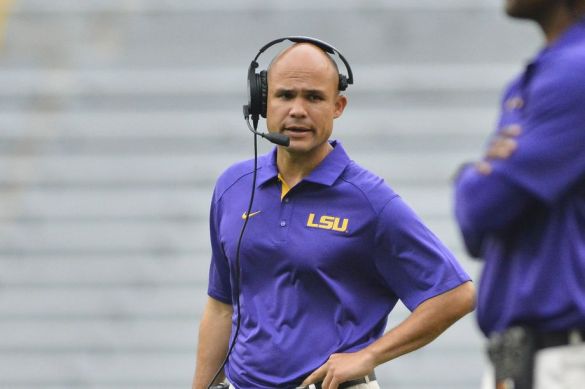
Dave Aranda, a SEC coordinator, is now making considerably more than Geoff Collins.

Every offseason or so over the past five years, something has happened to illustrate the urgency of getting Temple out of the G5 and into the P5.

You can argue all you want about the window already being closed for that eventuality, but if there’s even a one percent chance of it happening, Temple should pry to prop up that window and force it upward.

Maybe building a 35,000-seat stadium is a step in that direction. Maybe it’s not. (I’m thinking a 40-45K stadium probably would work more than a 35K one in attracting interest.) Probably winning a NY6 bowl game would be the best way to do it and bringing along a top basketball program would not hurt as well.

Whatever, staying in the G5 for the next 20 or so years is not a sustainable business model. Worse, it could mean “an event involving destruction or damage on an awesome scale.” That’s the very definition of the word apocalypse. If the G5 is marginalized into pretty much what is now FCS football–without the distinguishing feature of a true championship–it will be damaged beyond repair.

Real football will be playing with the big boys in the P5. Anything else will be considered the minor leagues.

The latest evidence of that occurred when it was leaked that several schools at the top of the Power 5 food chain are now paying their top coordinators MORE than the $2 million Geoff Collins is being paid to be the Temple football CEO.

If so, the trickle down effect—the inability of G5 schools like Temple to attract top head coaches and therefore top assistants—probably assures that the ceiling will be made of cement, not glass.

LSU defensive coordinator Dave Aranda is now making $2.5 million per season—a hefty $500,000 more than Collins currently makes—for doing the same job at the same level Collins left Florida to do. It doesn’t take much of an imagination to figure that Aranda does half as much with about a quarter of the headaches of Collins these days. That’s not to say Collins doesn’t love his job; it’s just that it is his responsibility to keep 105 scholarship athletes on the straight and narrow in addition to the winning that is demanded of him.

If LSU puts together a good defense and loses, the head coach, not Aranda, gets the blame.

Aranda now makes more than 75 of FBS head coaches and there are only 127 of those jobs in the world.

It appears the Aranda contract and other seven-figure contracts signed by Power 5 coordinators this offseason further marginalizes the 63 schools who play non-Power 5 football.

Pretty close to an apocalypse.

Friday: Scoreboard Watching